Bridging the Gap Between Curriculum Management and Student Success
Toronto, Canada – January 22, 2026 / Modern Campus /
From Fragmented Workflows to Seamless Student Journeys: The Connected Curriculum Advantage
Connected curriculum and catalog management systems are essential bridges between academic planning and student outcomes.
-
76.5% student persistence rates prove that well-managed academic pathways directly impact retention
-
Real-time curriculum data integration enables personalized learning experiences that boost engagement
-
Streamlined approval workflows allow institutions to respond quickly to student and industry needs
-
Career-aligned program design through connected curriculum systems increases graduate employability
Institutions can no longer afford to treat curriculum management as an administrative afterthought, as it’s now the foundation of student success.
The academic advisor’s office tells the story every semester. Students shuffle in, course catalogs in hand, looking confused and overwhelmed. They’re trying to piece together academic pathways that seem disconnected, wondering if their studies will actually prepare them for their career goals. This scenario unfolds countless times across campuses, revealing a critical gap between curriculum management and student success that institutions can no longer ignore.
Student persistence rates reached 76.5% in 2024, the highest in a decade. Yet the math says that nearly one in four students still don’t return for their second year. The difference often lies not in student capability, but in how well institutions connect their curriculum and catalog management to meaningful student experiences.
Institutions are turning to data-driven approaches to tackle challenges with enrollment, retention and student outcomes. Curriculum management is about creating connected learning experiences that guide students toward their goals.
Why Does Traditional Curriculum and Catalog Management Fall Short?
Many institutions treat curriculum management as a behind-the-scenes administrative function. Course catalogs get updated annually, approval processes drag on for months, and students navigate requirements without understanding how individual courses connect to their larger academic and career objectives. This fragmented approach creates unnecessary friction in the student experience.
Traditional systems operate in silos. Faculty design courses without real-time input on enrollment trends or student engagement data. Registrars manage scheduling without visibility into how course sequences impact student progression. Academic advisors guide students using potentially outdated information about program requirements or career outcomes.
The result? Students struggle to see the relevance of their coursework, academic pathways feel disjointed, and institutions miss opportunities to respond quickly to changing workforce demands. When curriculum management lacks connection to student outcomes, it becomes a barrier rather than a bridge to success.

Students expect their education to directly translate to career readiness. They want transparency about how their courses build toward specific competencies and job market opportunities. Without connected systems that demonstrate these relationships, even well-designed curricula can feel arbitrary and unfocused to learners.
How Do Connected Curriculum Systems Transform Student Outcomes?
Connected curriculum and catalog management systems change how institutions approach student success. Instead of treating academic planning as separate from student engagement, these platforms create integrated experiences that support learners throughout their educational journey.
What Makes Real-Time Data Integration So Powerful?
Real-time curriculum data integration allows institutions to track student progression, identify potential barriers and adjust offerings based on actual enrollment patterns and success metrics. When faculty can see how students engage with prerequisite courses, they can modify content to better prepare learners for advanced coursework.
This data-driven approach enables personalized academic planning. Students can visualize how their interests and career goals align with available programs, while advisors can provide guidance based on current information about course availability, enrollment capacity and program outcomes.
Institutions using connected curriculum management systems report improved collaboration between departments. Faculty, administrators and student services can access the same real-time information, reducing miscommunication and enabling faster response to student needs.
How Do Workflow Automation Benefits Support Student Success?
Automated curriculum approval processes reduce the time between identifying student needs and implementing program changes. Instead of waiting months for new course approvals or program modifications, institutions can respond quickly to emerging industry demands or student feedback.
This agility directly impacts student engagement. When institutions can rapidly update course content or introduce new certification pathways, students feel confident that their education stays current and relevant. Streamlined curriculum workflows also free up faculty time to focus on teaching and student interaction rather than administrative tasks.
Connected systems ensure consistency across all program materials. When course descriptions change or prerequisites are updated, the information automatically flows through catalogs, advising systems and student information platforms, eliminating confusion and reducing errors.
Why Does Career Pathway Alignment Matter?
Students evaluate their educational investments through the lens of career outcomes. Connected curriculum systems integrate real-time labor market data, salary projections and industry demand into program planning and student guidance.
This alignment transforms how students understand their education. Rather than completing courses to fulfill abstract requirements, learners can see direct connections between their coursework and professional competencies. Career-focused curriculum design helps students make informed decisions about their academic pathways while building confidence in their educational investment.
Institutions benefit from improved graduate outcomes and stronger employer relationships. When curricula demonstrably prepare students for in-demand skills and careers, graduates enter the workforce more successfully, enhancing institutional reputation and supporting long-term enrollment goals.
The Student Engagement Connection: Five Key Ways Connected Systems Boost Engagement
Student engagement thrives when learners understand how their education connects to their goals and interests. Connected curriculum and catalog management systems create multiple touchpoints that enhance student involvement and persistence.

-
Transparency Creates Confidence: When students can easily access accurate information about degree requirements, course sequences and career pathways, they feel more confident about their academic decisions. Clear visibility into program structure reduces anxiety and supports better planning.
-
Personalization Drives Motivation: Connected systems enable institutions to offer personalized course recommendations, flexible scheduling options and individualized academic planning. Students who feel their education is tailored to their unique circumstances show higher levels of engagement and persistence.
-
Real-Time Updates Maintain Relevance: Students expect current, accurate information about their programs. When curriculum systems provide real-time updates about course offerings, instructor assignments and program changes, learners feel that their institution is responsive and reliable.
-
Integrated Support Reduces Friction: Connected systems link curriculum information with advising resources, financial aid data and student services. This integration reduces the administrative burden on students, allowing them to focus on learning rather than navigating bureaucratic processes.
-
Career Connections Demonstrate Value: When students can see direct relationships between their coursework and career opportunities, they remain more engaged throughout their studies. Connected systems that integrate labor market data and employer feedback help students understand the practical value of their education.
Institutions using comprehensive student engagement platforms report stronger retention rates and improved student satisfaction. The key lies in creating seamless connections between academic planning and student support services.
What Impact Do These Systems Have on Higher Education Enrollment Strategies?
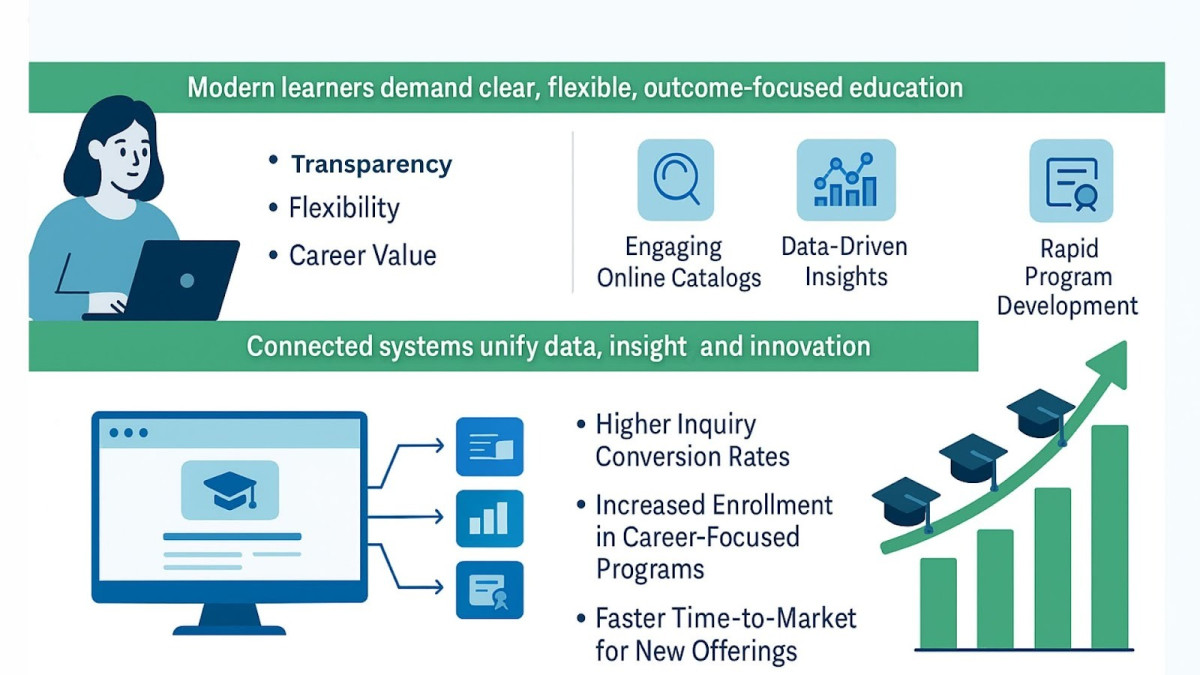
Connected curriculum and catalog management directly support modern higher education enrollment strategies by addressing the expectations of prospective students and their families. Learners want transparency, flexibility and clear value propositions from their educational investments.
Prospective students research programs online before ever contacting an institution. Modern course catalog software enables institutions to present their offerings in engaging, searchable formats that help prospects understand program benefits and requirements.
Based on research, traditional four-year institutions saw modest enrollment gains, but institutions offering flexible programming and clear career connections experienced stronger growth. Connected systems support targeted recruitment efforts by providing data about which programs attract students and which pathways lead to successful completion. Enrollment teams can use this information to refine their messaging and focus resources on high-impact initiatives.
These platforms also enable institutions to quickly develop and launch new programs that respond to market demands. When enrollment teams identify interest in specific career fields, connected curriculum systems allow rapid development of relevant certificates, credentials or degree pathways.
How Can Institutions Implement Connected Systems for Success?
Successfully implementing connected curriculum and catalog management requires planning that prioritizes technological capabilities and change management. The most effective approaches focus on incremental improvements that demonstrate value while building toward comprehensive integration.
Start with a thorough assessment of current systems and workflows. Understanding existing data sources, approval processes and user needs provides the foundation for making informed decisions. Map how information currently flows between departments and identify specific pain points that connected systems can address.
Engage stakeholders early and often throughout the process. Faculty, administrators, students and staff all interact with curriculum and catalog information differently. Comprehensive planning that incorporates diverse perspectives leads to solutions that actually meet user needs rather than creating new complications.
Prioritize integration capabilities when evaluating platforms. Connected systems derive their value from linking previously separate data sources and processes. Choose solutions that can integrate with existing student information systems, learning management platforms and other core institutional technology.
Plan for change management and training. Even the most intuitive systems require users to adapt established workflows and practices. Successful implementations include comprehensive training programs and ongoing support that help users maximize the benefits of connected platforms.
Establish clear metrics for measuring success. Connected systems should demonstrably improve student outcomes, operational efficiency and institutional effectiveness. Define specific goals and tracking mechanisms before implementation to ensure that investments deliver expected returns.
Consider phased rollouts that allow for testing and refinement. Rather than attempting to transform all processes simultaneously, successful institutions often begin with high-impact areas and gradually expand capabilities based on initial results and user feedback.
How Should Institutions Measure Success with Connected Systems?
Measuring the success of connected curriculum and catalog management systems requires tracking operational improvements and student outcome metrics. The most meaningful assessments combine quantitative data with qualitative feedback to provide a comprehensive understanding.
-
Student Success Indicators: Track retention and persistence rates, particularly focusing on how connected systems impact first-year student experiences. Monitor course completion rates, time to degree and graduate employment outcomes to understand how curriculum connections translate to long-term student success.
-
Operational Efficiency Metrics: Measure the time required for curriculum approval processes, catalog updates and program launches. Connected systems should reduce administrative burden while improving accuracy and consistency across academic materials.
-
Engagement and Satisfaction Measures: Survey students, faculty and staff about their experiences with curriculum planning and academic guidance. Connected systems should improve user satisfaction while reducing frustration with administrative processes.
-
Data Quality and Integration Success: Assess the accuracy and completeness of information across different platforms. Successful connected systems should eliminate data inconsistencies and provide users with reliable, current information.
Institutions that invest in comprehensive student support systems, including connected academic planning tools, report improved retention and completion rates. The most successful campuses use these metrics to continuously refine their approaches. Connected systems provide rich data about student behaviors, program effectiveness and operational efficiency that can inform ongoing improvements.
Frequently Asked Questions
What is connected curriculum management, and how does it differ from traditional systems? Connected curriculum management integrates curriculum planning, catalog production and student information systems into unified platforms that share real-time data.
How do connected systems improve student retention and engagement? Connected systems improve retention by providing students with clear academic pathways, real-time information about requirements and opportunities and transparent connections between coursework and career outcomes. When students understand how their education builds toward their goals, they’re more likely to persist and remain engaged throughout their studies.
What should institutions look for when evaluating connected curriculum management platforms? Institutions should prioritize platforms that integrate with existing student information systems, automate approval workflows, provide real-time data analytics and offer intuitive interfaces for both administrators and students. Look for solutions that support mobile accessibility, demonstrate measurable improvements in operational efficiency and include comprehensive training and support resources.
How long does it typically take to implement connected curriculum management systems? Implementation timelines vary based on institutional complexity and scope, but most institutions see initial benefits within 6–12 months. Full integration and optimization often take 12–18 months, with ongoing refinements and expansions continuing as institutions identify new opportunities to leverage connected data and workflows.
Building Bridges That Work
The gap between curriculum management and student success is a symptom of disconnected systems and fragmented approaches to academic planning. When institutions invest in connected curriculum and catalog management platforms, they create powerful bridges that link administrative efficiency with meaningful student experiences.
Your students deserve educational pathways that make sense, administrative processes that support rather than hinder their progress and academic programs that prepare them for successful careers. Connected systems provide the infrastructure to deliver on these expectations while enabling institutional agility.
Institutions that bridge the curriculum management-student success gap through connected platforms see improved retention, stronger student engagement and more effective enrollment outcomes. Modern Campus’s connected curriculum solutions help institutions create the transparent, efficient and engaging academic experiences that learners expect.

Contact Information:
Modern Campus
2482 Yonge Street #1366 Toronto, Ontario M4P 2H5
Toronto, ON M4P 2H5
Canada
Modern Campus
https://moderncampus.com/

