
KUNSHAN, JIANGSU, CHINA, September 10, 2026 /EINPresswire.com/ — The high production rejection rates and excessive thermal stress encountered during heavy-duty pipe manufacturing stem from inadequate melt calibration and poor torque distribution inside old machinery. When working with polyvinyl chloride, slight temperature variances across the barrel cause regional chemical degradation, leading to brittle sections in the finished infrastructure piping. Manufacturers face continuous pressure to eliminate these structural inconsistencies while mitigating rising electricity costs. Shanghai Jurry Plastics Machinery Co.,Ltd (JURRY) resolves these challenges through a synchronized physical compounding and forming architecture that establishes the best PVC pipe extrusion line for drainage solution in China by stabilizing pressure delivery and optimizing thermodynamic control.
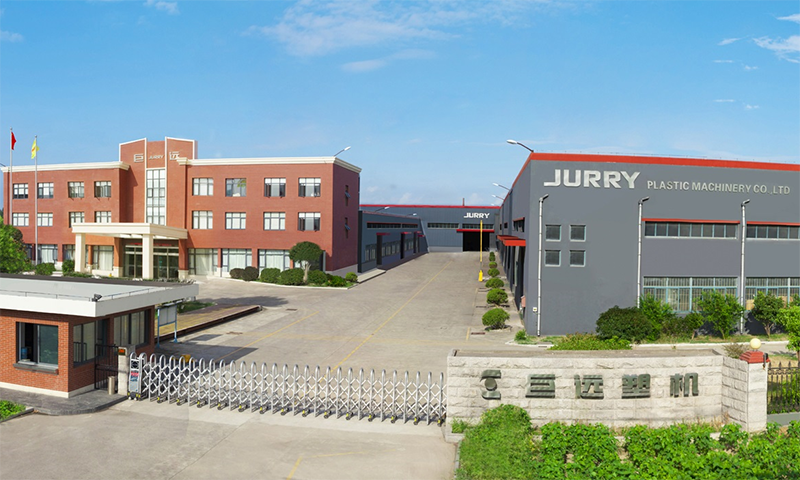
Modern infrastructure demands that municipal drainage networks withstand external soil loads and corrosive chemical effluents without developing stress fractures. Standard operations utilizing early-generation single-screw extruders or unoptimized multi-screw systems struggle to maintain material density because over-shearing scorches the polymer matrix. Backed by more than 30 years of focus on extrusion craftsmanship, JURRY maintains a manufacturing footprint spanning 40,000 square meters with over 200 industrial personnel. The organization has deployed more than 4,100 plastic extrusion installations across 120 nations, providing a proven technical pathway for upgrading from legacy hardware to high-capacity infrastructure production.
Core Comparison: JURRY High-Efficiency Production Line vs. Legacy Systems
1. Dedicated Twin-Screw Extrusion vs. Legacy Single or Obsolete Twin-Screw Systems
The primary mechanical differentiation between advanced manufacturing setups and older infrastructure lies in the specific design of the primary polymer processing unit. Traditional configurations rely heavily on general-purpose single-screw extruders or unrefined, first-generation twin-screw units that require heavy thermal input from external electrical resistance bands to melt the raw resin compound. This method often results in incomplete plasticization, meaning the core of the moving material stream remains under-processed while the outer boundaries experience localized overheating and polymer chain breakdown.
Conversely, Shanghai Jurry Plastics Machinery Co.,Ltd fits its production installations with custom-engineered parallel or conical twin-screw extruders equipped with high-torque distribution gearboxes and material-specific screw profiles. These advanced processing units generate highly controlled internal mechanical friction that significantly lowers the total power load demanded by the external barrel heating bands. By combining balanced mechanical shear with modulated thermal inputs, the mechanism achieves complete gelatinization of the dry blend without inducing structural weaknesses, allowing factories to run a highly productive PVC pipe extrusion line for drainage solution with optimized efficiency.
2. Digital Control and Inline Blending vs. Manual Batching and Visual Regulation
Obsolete production environments depend extensively on physical operator intervention during the initial material batching phases and the subsequent downstream calibration cycles, exposing product quality to human error. Operators running legacy production equipment must manually weigh stabilizing additives and combine base resins within open blending stations, leading to slight composition variances between separate production runs. Furthermore, historical control panels rely on manual knob adjustments for individual thermal zones based solely on physical visual inspections of the cooled pipe profile, causing frequent dimensional instability during continuous production runs.
JURRY eliminates these processing vulnerabilities by implementing fully enclosed, automatic additive weighing hardware alongside unified digital control interfaces. The system integrates high-precision automated material handling mechanisms that feed raw material components directly into the extruder throat with absolute percentage accuracy. Centralized Industrial 4.0 control architectures track melt temperature, transducer head pressure, and primary motor torque constantly in real time. When a deviation in viscosity or temperature occurs, the closed-loop automation instantly recalculates and adjusts parameters to keep the PVC pipe extrusion line running smoothly. This automatic oversight reduces physical labor overhead, minimizes material scrap during startup cycles, and guarantees that each manufacturing lot adheres strictly to targeted physical tolerances.
3. Customized Drainage Components vs. Generic Downstream Sizing Hardware
Standard downstream manufacturing equipment often treats different polymer pipe classifications uniformly, utilizing generic vacuum calibration tanks and baseline traction units that do not account for the specific physical weight of large-diameter PVC drainage components. During the processing of heavy, large-bore drainage lines, this lack of targeted engineering allows gravity to pull the hot, unsolidified plastic downward as it leaves the forming die, creating a common defect where the bottom wall of the pipe becomes substantially thicker than the top. Additionally, traditional mechanical cutting saws with reciprocating blades leave rough, fractured edges along the pipe end and generate high volumes of microplastic dust that require manual workplace cleaning and secondary chamfering.
To eliminate these structural distortions, Shanghai Jurry Plastics Machinery Co.,Ltd develops specialized pipe die heads and downstream cooling systems designed exclusively for the physical dynamics of heavy-wall PVC. The precise internal flow geometry of the die head ensures an entirely equal distribution of material velocity across the full circumference of the extrusion orifice. During the subsequent cooling phase, advanced non-sagging technology utilizes high-velocity vacuum calibration chambers outfitted with internal concentric water spray rings to freeze the outer skin of the pipe uniformly, countering gravitational displacement. Downstream pulling force is delivered by multi-track haul-off units synchronized directly to the main extruder drive via digital bus communication to eliminate structural stretching. An integrated planetary cutting machine then executes clean, dust-free cuts, ensuring the completed components from the VC pipe extrusion line for drainage are immediately ready for field installation or joint socketing without secondary processing.
Industrial Validation in Building and Infrastructure Applications
The real-world financial advantages of replacing obsolete machinery become obvious during continuous production schedules for commercial building drainage and residential waste networks. Industrial drainage projects require strict geometric tolerances to secure tight, leak-proof mechanical joints that remain sound for decades under underground pressure. Shanghai Jurry Plastics Machinery Co.,Ltd supports these commercial objectives by offering fully integrated, single-source manufacturing configurations that embed all necessary auxiliary machinery—including heavy-duty compressed air systems, industrial water chillers, and scrap-recycling pulverizers—into a single operational loop.
This centralized engineering strategy cuts down deployment schedules and reduces ongoing plant maintenance costs because all downstream components operate on identical communication protocols and shared mechanical standards. Manufacturing facilities can transition rapidly from raw dry-blend storage to finished, socketed drainage components within a highly organized physical plant layout. By uniting all auxiliary equipment under the primary control software, the system completely avoids the technical errors and communication delays common when linking different machinery brands, allowing operators to safely reach maximum production speeds shortly after installation.
Long-Term Value and Resource Conservation
Investing in an optimized extrusion system represents a strategic commitment to resource conservation and lowering manufacturing overhead. Although legacy machinery may appear functional, its elevated energy consumption, high scrap rates, and constant manual calibrations generate hidden operational costs that steadily diminish market competitiveness.
By combining industrial craftsmanship with targeted engineering, JURRY builds systems that reduce electrical consumption and conserve raw materials through precise dimension management. Deploying a modern PVC pipe extrusion line for drainage enables manufacturing organizations to increase total tonnage output, lower per-unit energy expenses, and consistently supply reliable, code-compliant drainage solutions to global markets.
For specific technical documentation regarding specialized machinery configurations and full system availability, please visit the official corporate portal at www.jurryextrusion.com.
SHANGHAI JURRY PLASTICS MACHINERY CO.,LTD
SHANGHAI JURRY PLASTICS MACHINERY CO.,LTD
+ +86 13788973787
email us here
Legal Disclaimer:
EIN Presswire provides this news content “as is” without warranty of any kind. We do not accept any responsibility or liability
for the accuracy, content, images, videos, licenses, completeness, legality, or reliability of the information contained in this
article. If you have any complaints or copyright issues related to this article, kindly contact the author above.

Media gallery