

San Francisco, CA – September 24, 2026 – PRESSADVANTAGE –
PallasAI has introduced a platform designed to help brands monitor and improve how they appear across AI-generated answers and recommendations. The PallasAI AI visibility platform combines multi-platform monitoring, a structured AEO audit, actionable diagnostics, supported fixes, and an autonomous Agent that continues working after the first report is delivered.
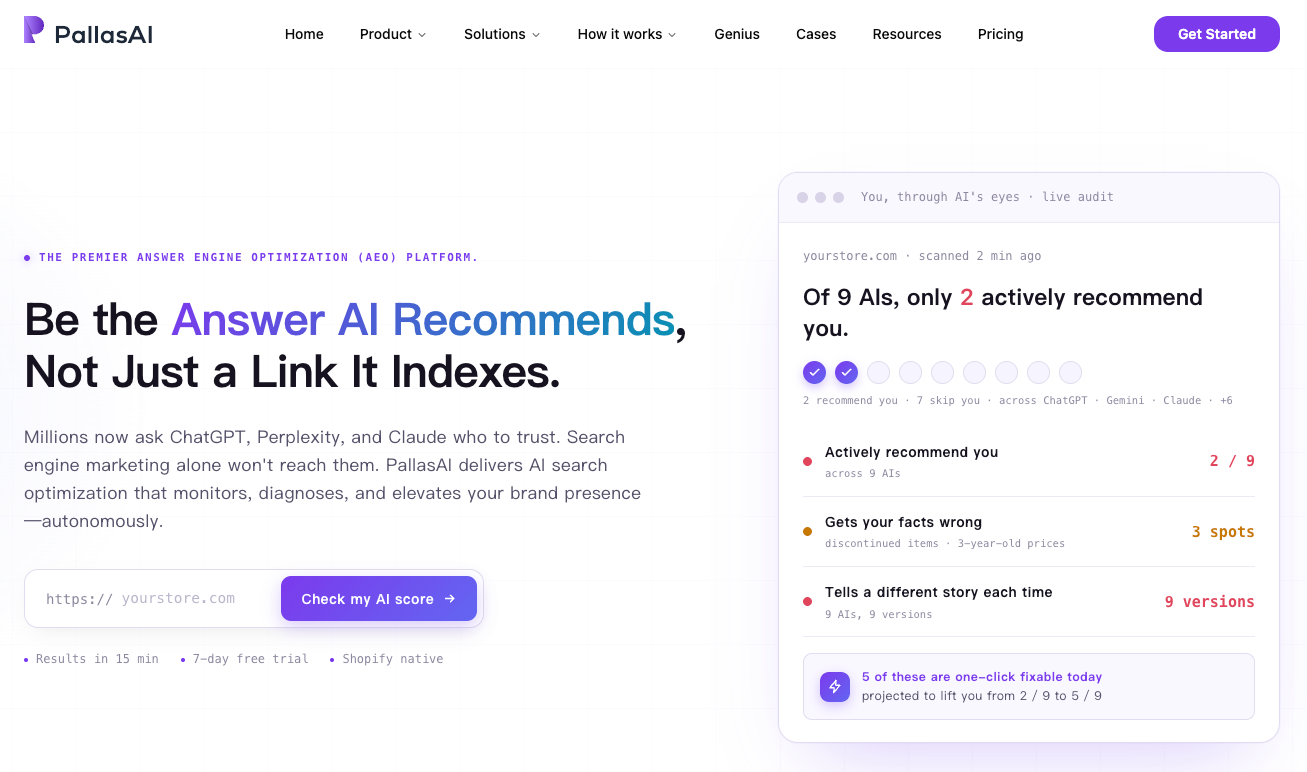
The platform monitors nine AI systems, including ChatGPT, Gemini, Claude, Perplexity, and Copilot, to show whether a brand is found, recommended, and described accurately. PallasAI brings the answers into one workspace so marketing teams can compare visibility across platforms instead of checking each system manually.
Its audit evaluates AI visibility through three gates called Fetchable, Chosen, and Extractable. These gates test whether AI systems can reach a brand’s content, select the brand for relevant questions, and retrieve current facts without substituting outdated prices, discontinued products, or inconsistent descriptions.
PallasAI says the audit runs 23 checks and returns a report in approximately 15 minutes. Each issue is connected to the affected visibility gate and a next action, replacing a general score with a structured explanation of where the brand is being blocked, overlooked, or misrepresented.
PallasAI also identifies five supported issues that can be addressed with one-click fixes. For Shopify merchants, approved technical changes can be written back to the store through the native integration, reducing the engineering work required for crawler access, structured data, sitemap, and product-information corrections.
The PallasAI AEO Score dashboard uses a blended score to summarize performance, then separates that score by AI platform, customer topic, and trend over time. This breakdown helps teams distinguish an isolated fluctuation from a sustained decline and identify which platform or high-intent topic is pulling the overall result down.
PallasAI Insights allows teams to move from the total score to the response detail behind it. A single blended score may hide a strong result in ChatGPT and a weak result in Perplexity, while a topic heatmap can reveal customer questions for which the brand is rarely or never recommended.
Audit and monitoring findings can be sent into an opportunity map that organizes the affected topics and prepares work for the Agent. The system connects diagnosis with content and remediation workflows so the result is not limited to another dashboard or a list of tasks for the marketing team.
The autonomous AEO Agent operates through a watch, decide, act, and review cycle. It detects changes across nine AI platforms, selects the next action from approved Playbooks, prepares or executes the work, and returns to the relevant answers to check whether the brand description, recommendation, ranking, or citation changed.
The PallasAI autonomous AEO Agent includes an Agent Inbox for work that has reached a human approval point. Teams can inspect a proposed content response, brand-fact correction, price update, or structured change, review the supporting context, and approve the action without rebuilding the task from the original alert.
Playbooks define when the Agent may proceed automatically and when a decision must remain human-owned. Published examples include competitor content alerts, brand-fact conflict alerts, post-publication checks at scheduled intervals, monthly AEO reporting, and custom condition-and-action workflows for recurring visibility problems.
PallasAI grounds these actions in Marketing Context OS, which assembles fragmented product facts, positioning, claims, reviews, and market information into a consistent brand context. The Agent uses that calibrated context when drafting or correcting content, helping automation reflect approved brand information rather than inventing unsupported details.
The platform also separates issues on a company’s own website from gaps on third-party sources. Supported technical problems can move into direct remediation, while missing evidence on review sites, forums, directories, and other sources becomes a content and placement plan based on where AI systems obtain information.
PallasAI reports anonymized outcomes on its website, including a home direct-to-consumer brand moving from zero of nine AI recommendations to seven of nine, a beauty brand improving correct facts from two of nine to nine of nine, and a consumer-electronics brand increasing steady recommendations from three of nine to eight of nine. The company presents these examples as first-party results rather than universal performance guarantees.
The product is intended to make AI visibility an operational process instead of a periodic research exercise. By connecting monitoring, diagnosis, prioritized fixes, content preparation, controlled execution, and post-action review, PallasAI gives marketing teams one system for understanding what AI platforms say and managing the work required to change those answers across a changing set of answer engines worldwide.
About PallasAI:
PallasAI was founded by a group of AI researchers and data scientists. The company is a pioneer in the AEO field. Its mission is to build critical infrastructure connecting enterprise precision knowledge with global AI systems, ensuring brands maintain leadership and authority in the new search era. Learn more at https://www.pallasai.io/
###
For more information about PallasAI, contact the company here:
PallasAI
Ethan
contact@pallasai.io
San Francisco, CA
