
SHENZHEN, GUANGDONG, CHINA, November 26, 2026 /EINPresswire.com/ — High Quality Flame Retardant Drop Cable Supplier Meeting Strict UL Compliance Standards
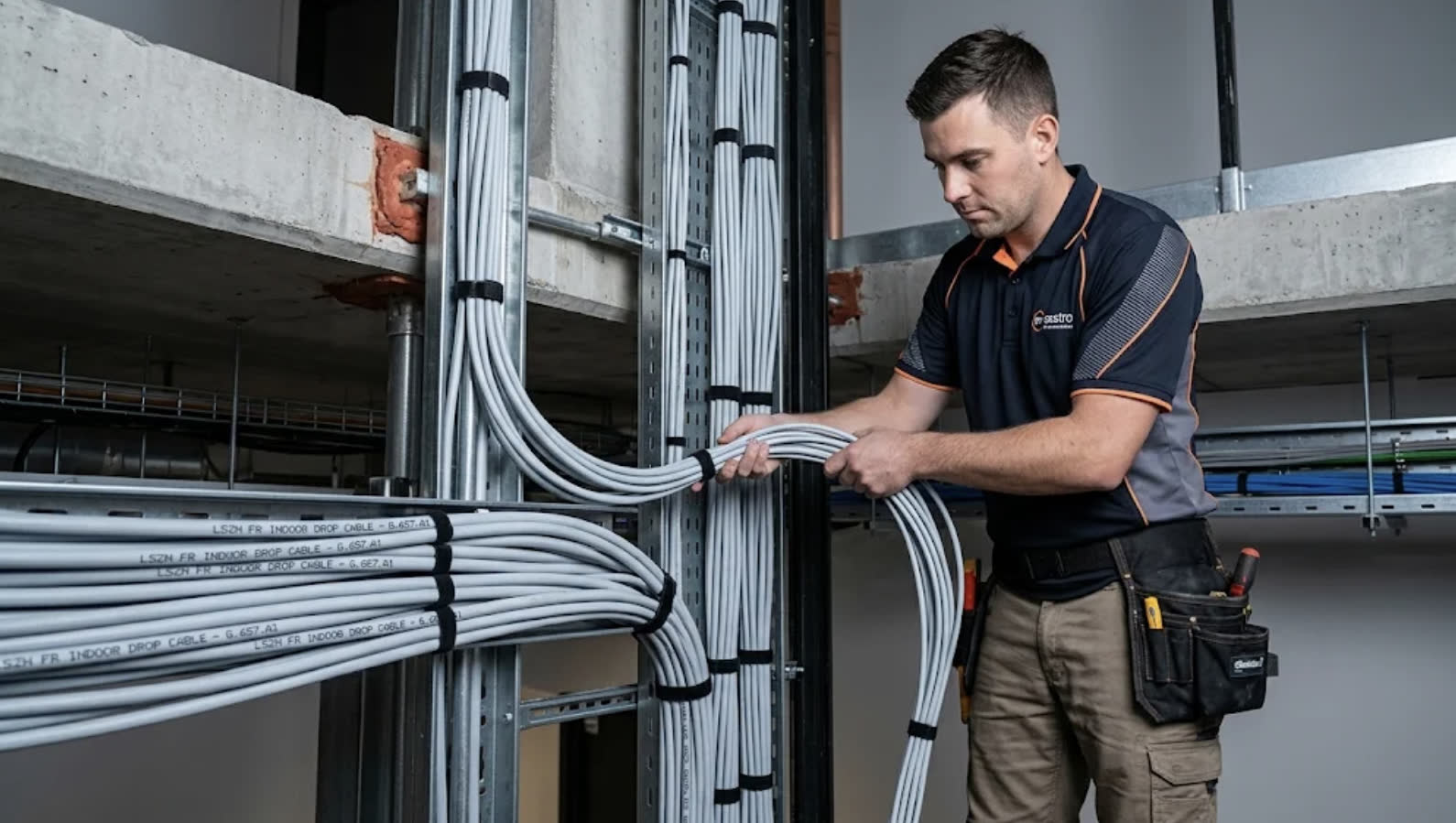
Modern enterprise networks and multi-dwelling residential buildings require extensive interior fiber pathways to support high-speed internet delivery and advanced digital services. As digital demands expand exponentially across global markets, telecommunications engineers deploy numerous indoor optical links through tight vertical risers, ceiling plenums, and horizontal drop zones. However, managing high-density indoor installations introduces critical fire safety responsibilities that demand meticulous planning and engineering precision. Electrical short circuits, environmental heat accumulation, and accidental thermal exposure can turn improperly rated cables into dangerous channels for rapid flame propagation. Selecting materials from a reputable High Quality Flame Retardant Drop Cable Supplier mitigates these severe structural risks. Building owners, property managers, and network installers increasingly prioritize rigorous safety credentials over basic cost considerations. Establishing strict procurement benchmarks ensures that indoor fiber infrastructure complies with international fire safety codes, protecting human lives and physical assets during unexpected emergencies. Furthermore, proactive material selection prevents expensive retrofits, satisfies insurance underwriters, and ensures long-term operational resilience across complex commercial real estate developments and urban residential complexes.
Navigating Indoor Fire Safety Standards: Understanding UL and IEC Flame Retardancy in High-Density Cable Pathways
Navigating international fire safety regulations requires a comprehensive understanding of standardized testing protocols established by global certifying bodies. Underwriters Laboratories (UL) and the International Electrotechnical Commission (IEC) define specific criteria for evaluating how cable sheaths react to direct ignition and continuous thermal stress. UL standards categorize cables based on precise installation locations, such as plenum spaces and vertical riser shafts, where intense draft currents can accelerate fire spread across multiple floors. For instance, plenum-rated cables undergo aggressive flame and smoke density tests to ensure minimal toxic gas emission and low optical smoke opacity during combustion. Similarly, IEC frameworks establish strict performance thresholds regarding flame retardancy, smoke generation, and halogen acid gas evaluation, as detailed in broader industry analyses covering indoor armored fiber optical cable solutions. Specifying standard polyethylene or non-compliant PVC sheaths inside enclosed buildings violates municipal fire codes and compromises overall structural safety. Engineering teams must evaluate exact building blueprints to match appropriate fire ratings with specific indoor deployment zones, preventing legal liabilities and ensuring long-term life safety compliance. Moreover, understanding regional building codes allows project managers to select cable compounds that satisfy both local municipal mandates and international insurance requirements without delaying project commissioning schedules.
Material Engineering & Structural Selection: Evaluating Flame-Retardant Drop and Armored Cable Topologies
Choosing the correct physical topology depends heavily on the unique environmental demands of indoor routing environments and building architectures. Interior FTTH drop cables, such as the GJXH and GJFXH series, utilize compact flat profiles designed for tight wall-grout installations, narrow conduits, and discrete baseboard routing. These drop cables rely on specialized thermoplastic or Low Smoke Zero Halogen (LSZH) outer compounds that prevent flame travel while maintaining exceptional flexibility around sharp interior corners. Conversely, high-density enterprise networks often deploy indoor armored fiber cables featuring micro-armor flexible steel tape. This metallic layer protects delicate glass fibers from accidental crushing in high-traffic commercial conduits and crowded server room trays without sacrificing fire-retardant performance. Balancing mechanical protection with chemical flame resistance prevents jacket degradation during physical stress events. Manufacturers formulate these specialized polymer blends to suppress ignition tendencies, ensuring that internal optical components remain secure and operational even when exposed to localized thermal threats. Additionally, integrating specialized additives into the polymer matrix enhances resistance to ultraviolet light and chemical cleaning agents, extending the operational lifespan of the fiber assets inside commercial properties and multi-tenant office buildings.
The Buyer’s Compliance SOP: How to Request and Verify Flame-Retardant Documentation from Suppliers
Verifying vendor claims requires a systematic standard operating procedure during the initial procurement and technical auditing phases. Procurement teams should never rely solely on marketing brochures or unverified product labels when purchasing safety-critical building materials. Instead, technical managers must request comprehensive compliance documentation, including independent third-party laboratory test reports, Factory Acceptance Test logs, and material Certificates of Analysis. Reviewing these documents allows engineers to cross-reference specific compound formulations, smoke density indexes, and halogen content percentages against established regional building codes. Experienced buyers also examine lot-level traceability records to confirm that delivered reels match tested prototype specifications. Establishing this rigorous verification workflow eliminates counterfeit compliance certificates and protects network operators from costly project delays or failed building inspections. Proactive technical auditing transforms safety compliance from a bureaucratic hurdle into a reliable guarantee of operational excellence. Furthermore, maintaining clear audit trails simplifies insurance claims and satisfies independent regulatory inspections over the multi-year lifecycle of the deployed communications network, ensuring permanent peace of mind for property owners and system integrators.
Custom Manufacturing & Agile Delivery: How Fiber Hope Secures Compliant Indoor Network Infrastructure
Delivering dependable optical solutions for complex indoor environments demands advanced manufacturing capabilities and strict quality control protocols. Fiber Hope (Fiber Hope Optical Communication Tech Co.,Ltd.) operates specialized production facilities engineered to manufacture compliant indoor drop cables and armored fiber solutions. Precision extrusion machinery applies uniform LSZH and flame-retardant sheaths around G.652D or G.657A optical cores, ensuring consistent outer dimensions and optimal mechanical flexibility. Furthermore, Fiber Hope maintains agile production scheduling to fulfill custom core counts, specialized color-coding requirements, and tailored jacket thicknesses for global infrastructure projects. Every production batch undergoes rigorous in-house testing to evaluate tensile strength, crush resistance, and flame propagation limits prior to export packaging. Industry professionals seeking to enhance their indoor network safety standards can review detailed product specifications, customization workflows, and compliance documentation through Fiber Hope Optical Communication Tech Co.,Ltd. at https://www.cablefiberhope.com/. Through consistent quality management and technical collaboration, Fiber Hope helps modern telecommunications providers build safe, resilient, and future-proof digital connectivity across diverse commercial environments.
Fiber Hope Optical Communication Tech Co., Ltd.
Fiber Hope Optical Communication Tech Co., Ltd.
Legal Disclaimer:
EIN Presswire provides this news content “as is” without warranty of any kind. We do not accept any responsibility or liability
for the accuracy, content, images, videos, licenses, completeness, legality, or reliability of the information contained in this
article. If you have any complaints or copyright issues related to this article, kindly contact the author above.

Media gallery