

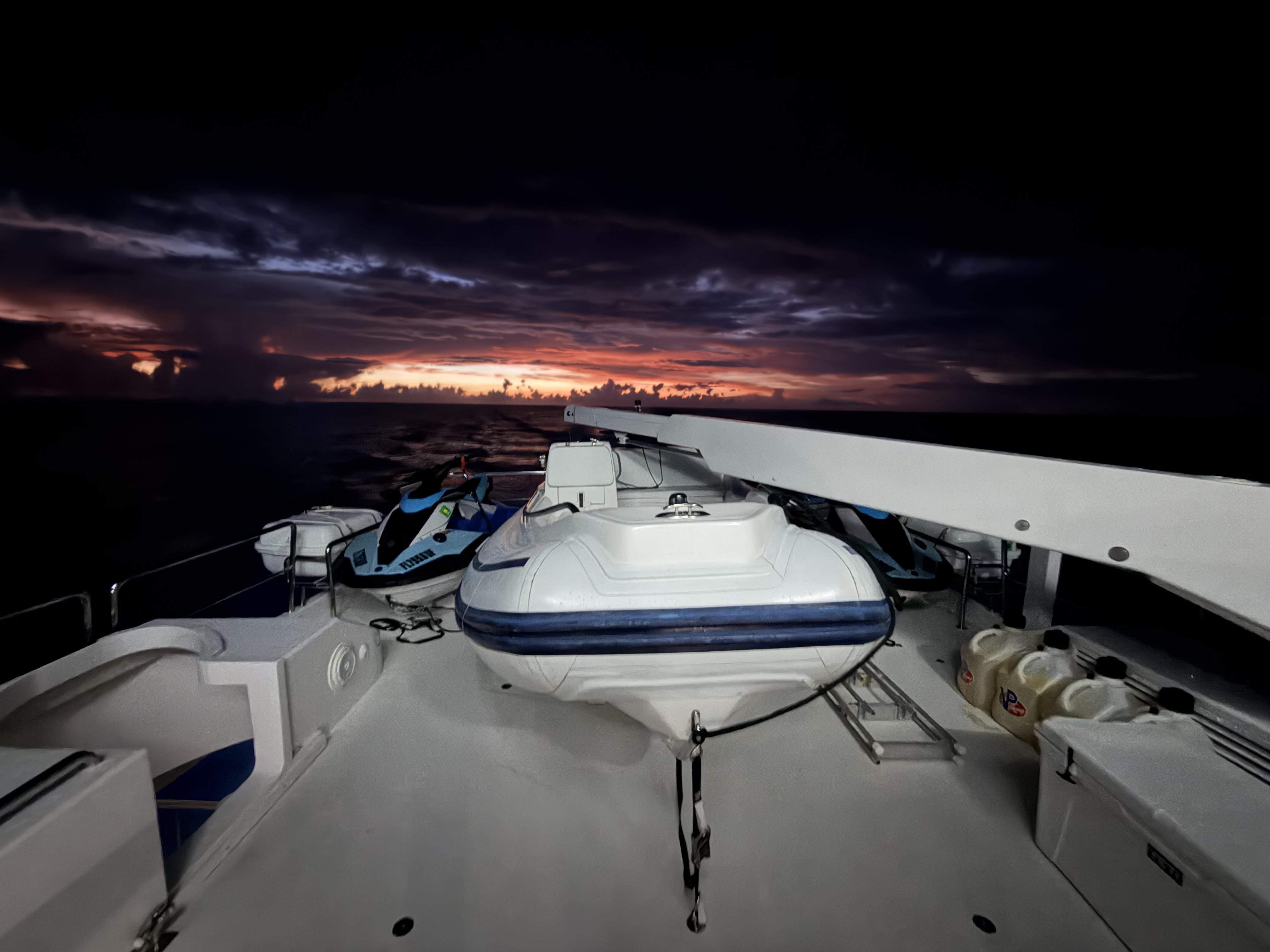
West Palm Beach, Florida Nov 12, 2026 (Issuewire.com) The Bahamas is home to hundreds of islands and cays, many known for their secluded beaches, turquoise waters, and remote anchorages. While these destinations are among the country’s greatest attractions for luxury yacht travelers, reaching them aboard a larger motor yacht isn’t always as straightforward as it seems.
For yacht captain Christopher O’Reilly, who has operated motor yachts up to 126 feet and captained charters throughout the Bahamas, vessel size is an important consideration when planning visits to smaller island destinations.
Unlike smaller recreational boats, larger motor yachts require additional attention to water depth, maneuvering space, anchoring conditions, tender access, and available shore facilities. A location easily accessible to a smaller vessel may not suit a larger yacht.
“People see a beautiful island and naturally want to go there, but the first question is whether the yacht can safely access the area,” O’Reilly explains. “You have to consider the vessel’s draft, the room available to maneuver, and what options you have if there isn’t a suitable dock. Sometimes the best way to visit an island is to keep the yacht farther offshore and use the tender.”
Vessel Size Changes the Approach
The Bahamas offers a distinctive cruising environment, with shallow banks, narrow passages, and islands surrounded by varying water depths.
These conditions add considerations for larger motor yachts, which typically require more space and deeper water than smaller recreational vessels.
A yacht’s draft, the vertical distance between the waterline and its lowest underwater point, determines the minimum depth required for safe operation. However, captains must also maintain an appropriate margin beneath the vessel to account for changing water levels, bottom conditions, and other factors.
Length and maneuverability introduce further considerations. A vessel over 100 feet requires considerably more room to turn, approach a dock, or reposition than a small powerboat.
O’Reilly notes that knowing a yacht’s dimensions and handling characteristics is essential when evaluating a destination.
“Two yachts can be similar in length and still have different operating limitations,” he says. “One might have a deeper draft, while another handles differently in tight spaces. You have to make decisions based on the vessel you’re actually operating, not just whether you’ve visited that location before.”
This becomes particularly important when traveling between larger ports and smaller islands where marine infrastructure may be limited.
Not Every Island Has Facilities for Large Yachts
Major Bahamian destinations such as Nassau offer established marinas and services that can accommodate a range of vessels.
Smaller islands and remote cays may have fewer options.
Some locations have docks designed primarily for local boats, fishing vessels, or smaller recreational craft. Others may have no suitable docking facilities.
Even where a dock is available, its length, water depth, exposure, and approach may make it unsuitable for a larger motor yacht.
“A dock being there doesn’t automatically mean it’s a dock you can use,” O’Reilly explains. “You need to know the depth alongside it, how much space you have on the approach, and whether the structure is appropriate for the yacht. You also have to think about what happens if the wind changes while you’re there.”
For captains, confirming these details before arrival is an important part of destination planning.
Rather than assuming a marina or dock can accommodate the yacht, operators should verify current facilities, vessel size limits, and available services directly with the destination.
Tenders Make Smaller Destinations More Accessible
When a larger yacht can’t safely approach a beach or dock, a tender often connects the vessel to shore.
Tenders are smaller boats carried or towed by yachts and used to transport guests, crew, equipment, and supplies.
Throughout the Bahamas, they can help charter guests explore destinations that would otherwise be inaccessible to the main vessel.
However, tender operations introduce their own planning requirements.
Captains and crew must consider the tender’s capacity, sea conditions, boarding arrangements, beach access, and the distance between the yacht and shore.
Transporting guests to a restaurant or beach may be relatively straightforward in calm conditions, but the same journey can become more complicated when wind, waves, or currents increase.
“Using the tender gives you more options, but you still need to plan the transfer,” O’Reilly says. “You have to consider where the guests will board, what the approach to shore looks like, and whether the conditions are suitable for getting everyone there and back comfortably.”
For larger yacht operations, the tender is therefore more than a recreational accessory. It is an important part of the guest experience at smaller island destinations.
Remote Destinations Require Additional Planning
Beyond docking and navigation, captains must also consider the services available at each destination.
Fuel, fresh provisions, waste disposal, repair facilities, and other marine services may be readily available in larger ports but limited or unavailable around remote islands.
This can influence how long a yacht remains in a particular area and how the crew prepares before departure.
For example, a charter visiting several remote cays may need to carry sufficient provisions and supplies for the entire period rather than relying on opportunities to replenish them along the way.
A captain must also understand the vessel’s fuel requirements, onboard storage capacity, and options for obtaining assistance if equipment problems arise.
“Once you leave a major port, you can’t assume the same services will be available at the next stop,” O’Reilly says. “If you’re planning to spend several days around smaller islands, you need to think ahead about what the yacht and crew will need during that time.”
These considerations matter most for luxury charters, where guests expect a consistent standard of service no matter how remote the destination.
The Best Anchorage Is Not Always the Closest One
For larger motor yachts, choosing where to anchor can be just as important as deciding which island to visit.
A location close to shore may appear convenient, but it must also provide appropriate water depth, suitable bottom conditions, adequate swinging room, and protection from prevailing conditions.
Captains must account for the vessel’s length, draft, anchoring equipment, and the space required as the yacht moves with wind and current.
In some cases, a more distant anchorage may provide a better option than attempting to position the yacht closer to the destination.
O’Reilly explains that guests may not immediately recognize why a captain selects one location over another.
“Sometimes the beach everyone wants to visit is right there, but that doesn’t mean the yacht should be anchored as close to it as possible,” he says. “You might have a much better anchorage farther away and use the tender to bring everyone in. The important thing is choosing the right place for the yacht.”
That decision can improve both operational safety and the overall guest experience.
Experience Helps Captains Match the Vessel to the Destination
O’Reilly believes operating larger motor yachts in the Bahamas requires an understanding of both the vessel and the cruising grounds.
The same destination may present different challenges depending on the yacht’s dimensions, equipment, draft, and handling characteristics. Weather, tides, and local conditions can also affect whether a particular approach is suitable.
For charter guests, these considerations are often handled behind the scenes. They may simply enjoy arriving at a secluded beach or visiting a small island without realizing the planning required to make the experience possible.
O’Reilly emphasizes that successful destination planning is not about taking the largest yacht as close to shore as possible. It is about identifying the most appropriate way to reach the destination while respecting the vessel’s limitations.
“The Bahamas gives you access to some incredible places, but every yacht has its limits,” he says. “A good captain understands those limits and knows how to work within them. Sometimes that means bringing the yacht into a marina, sometimes it means anchoring offshore, and sometimes it means choosing a different location altogether.”
For larger motor yacht operators, that combination of vessel knowledge, local experience, and practical judgment is essential to navigating the Bahamas’ smaller destinations.
About Christopher O’Reilly
Christopher O’Reilly is a Palm Beach-based yacht captain with experience operating motor yachts up to 126 feet. His professional background includes working aboard motor yachts throughout the Bahamas, with experience in the Exumas, Nassau, Spanish Wells, Harbour Island, and surrounding cruising grounds. His work involves vessel operations, navigation, charter planning, tender coordination, and managing the practical considerations of visiting smaller island destinations.
Source :Christopher O’Reilly
This article was originally published by IssueWire. Read the original article here.
